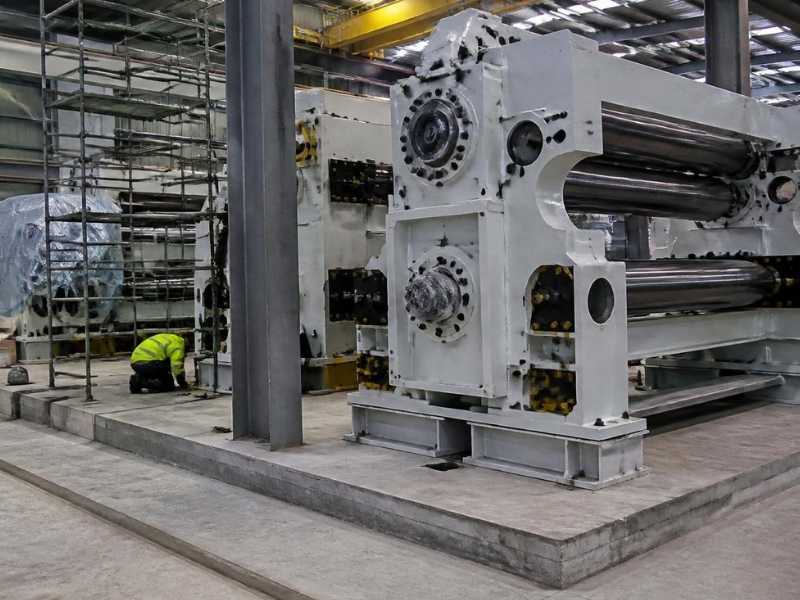
New production equipment often arrives with tight placement tolerances and very little room for error. The pad it sits on has to be in the right spot, at the right height, and lined up with everything around it. Miss by a small amount, and the install crew spends days shimming, grinding, or moving anchors.
Inside a working plant, that layout gets harder. Existing machines keep running, the slab has years of patches and settlement, and utilities run through the floor in places nobody has mapped. Every one of those factors can push a pad out of position.
A construction survey gives plant engineers, contractors, and installers a measured plan to work from. It sets reliable reference points, maps the floor, and checks layout before concrete is poured. Bring the surveyor in during design, and the install goes much smoother.
Construction Survey Control for Equipment Pads Near Existing Production Lines
Survey control is a set of fixed reference points that every measurement on the job ties back to. Indoors, these are usually marked on columns, walls, or the slab itself. They let the surveyor place a new pad in exact relation to the building grid and the machines already in place.
Existing production lines add a challenge. The new pad may need to line up with a conveyor, a press, or a process line that was installed years ago. The surveyor measures those existing machines first, then uses them along with the building grid to set the new layout.
Protecting Control Points in a Busy Plant
Forklifts, carts, and foot traffic can bump or cover control marks. Ask the surveyor to set points in protected spots, such as column faces or out-of-the-way wall locations. Confirm that the crew checks those points again before each major layout step.
Machine Vibration Zones and Their Influence on Pad Layout
Many industrial machines shake the floor while they run. Presses, compressors, and large motors can send vibration into nearby slabs and equipment. Engineers often design pads with isolation joints or extra mass to keep that movement from spreading.
The engineer sets the spacing and isolation details. The construction survey locates existing machines, pad edges, and isolation gaps so the new layout respects that design. If a new pad ends up a few inches too close to a heavy press, the isolation plan may not work as intended.
Vibration affects the survey itself too. Survey instruments need a steady setup, and a shaking floor can throw off readings. Plan layout work during a shutdown, a shift change, or a slower period when possible, and talk with the surveyor about which machines matter most.
Hidden Slab Irregularities That Complicate Industrial Equipment Positioning
Plant floors are rarely as flat or level as drawings suggest. Slabs settle over time, older sections may slope toward drains, and past repairs leave patches at different heights. These differences can be large enough to affect how equipment sits.
A construction survey can map floor elevations on a grid across the work area. That gives the design team a clear picture of high spots, low spots, and slopes. With that data, engineers can decide whether to grind, add grout, build up the pad, or adjust the design.
Signs of Floor Problems to Point Out
Walk the area with your surveyor before fieldwork begins. Point out cracks, joints, patched sections, and places where water collects. Share any history of settlement or past equipment moves, since those details help explain what the survey finds.
Equipment Pad Offsets Around Embedded Utilities and Service Trenches
Plant slabs often hide more than people expect. Electrical conduit, air lines, floor drains, old anchor bolts, and covered service trenches can all sit right where a new pad needs to go. Cutting into one of these can stop production or create a safety hazard.
Before any saw cutting or coring, many teams bring in a scanning service. Ground-penetrating radar, often called GPR, is a common tool that can detect objects inside or under concrete. The scanning crew marks what they find on the slab surface.
The construction survey then ties those marks to the building grid. That lets designers set offsets, which are planned distances between the new pad and each buried feature. Keep records of these findings, because they’ll help with future projects in the same area.
Use this quick checklist before layout starts:
- Gather old drawings showing slab utilities and trench locations
- Ask maintenance staff about past changes that may not be on paper
- Schedule scanning before any cutting or drilling
- Have the surveyor tie all scan marks to the same control
Construction Survey Checks for Multi-Machine Alignment and Installation Tolerances
Many projects place several machines that must work together in a line. A conveyor feeding a machine, or a series of stations on one process line, all need to share the same centerline and height. Small errors at each pad can add up across the whole line.
Installation tolerances are the allowable limits for position and height. They usually come from the equipment maker and the project engineer, and they can vary a lot by machine type. Ask for those numbers early so the surveyor can plan the right methods and checks.
When to Check the Layout
The survey team usually checks the layout at several key points. They confirm form locations before concrete goes in. They check anchor bolt templates or embed plates, which are the steel pieces set into concrete to hold the machine. After the pour, they verify the pad edges, top elevations, and bolt locations.
That last check is often called an as-built survey, since it records what was actually built. Final machine alignment is usually handled by millwrights or the equipment installer, who make fine adjustments. A good survey gives them accurate reference lines and benchmarks to start from.
Frequently Asked Questions
When should a construction survey start on an equipment pad project?
Bring the surveyor in during design, before the pad layout is final. Early survey work can map the floor, existing machines, and known utilities. That data helps engineers avoid conflicts before drawings go out for pricing. Waiting until the concrete crew arrives often leads to delays and changes.
Can surveying be done while the plant is running?
Often it can, with some planning. Vibration, traffic, and safety rules can all affect how and when the crew works. Many teams schedule key layout tasks during shutdowns or slower shifts. Talk with plant safety staff and the surveyor ahead of time to set a workable plan.
Does the surveyor handle final machine alignment?
Usually not. The surveyor sets control points, lays out pads, and checks anchor bolts and elevations. Fine alignment of the machine itself is typically done by millwrights or the equipment installer. The survey gives them the accurate reference points they need to finish the job.