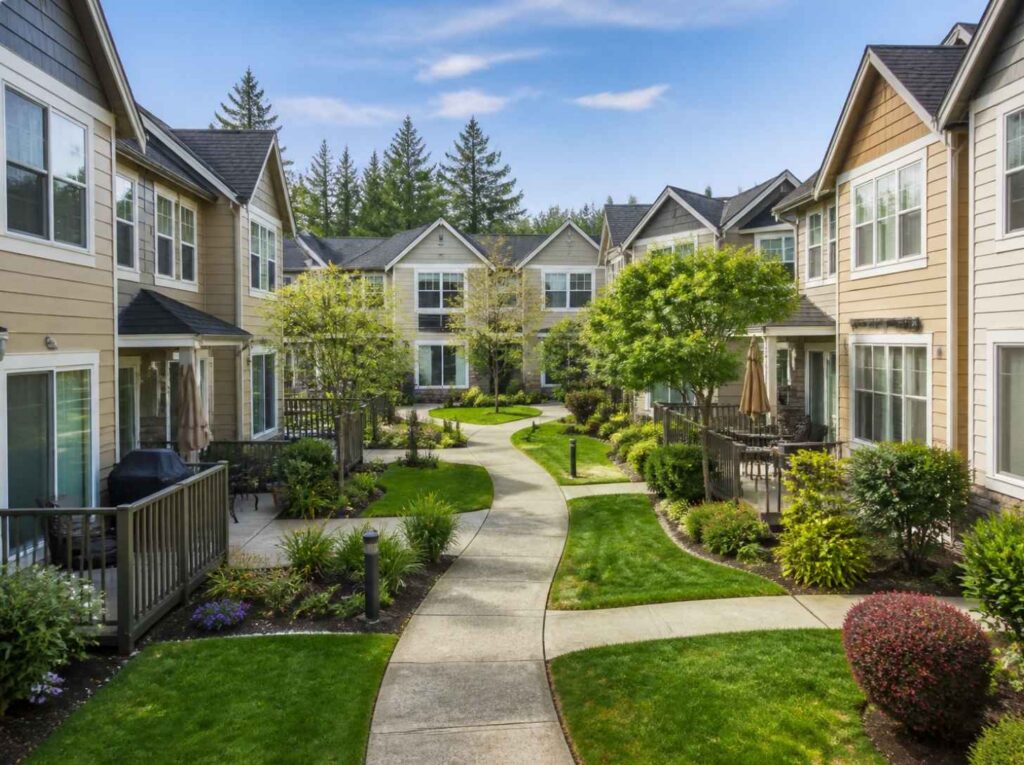
Courtyard homes pack a lot of living into a small footprint. Homes sit close together, and shared walkways, gardens, and green spaces tie the community together. That closeness is the appeal, but it also makes lines easy to blur.
A patio that creeps past a lot line or a fence that blocks a shared path can lead to HOA letters or neighbor disputes. A property survey shows where your lot ends, where common areas begin, and what rights others have to cross. Get one before you buy or build, and many of those problems never start.
Property Survey Review of Courtyard Boundaries and Shared Spaces
Courtyard communities often mix private lots with shared land owned by an HOA. The recorded plat usually shows both. Common areas may include walkways, lawns, mail kiosks, and parking.
The surveyor finds your lot corners and compares them to the plat and your deed. The drawing then shows where your private land meets common areas. Many owners learn their side yard is smaller than they thought.
Read the plat and HOA documents along with the survey. Together, they explain who owns each space and who maintains it. Ask the HOA for any recorded changes to the original layout.
Common Walkway Easements Between Closely Spaced Homes
Walkways between close homes often cross more than one lot. An easement gives others the right to use part of your land for a set purpose, like walking to the mailbox or a shared garden. The easement may appear on the plat or in a separate recorded document.
The survey shows where recorded walkway easements fall and where the actual path sits today. Paths sometimes get moved during construction or repairs. When the path and the easement don’t match, ask the HOA or an attorney how to fix it.
You usually can’t block an easement area with fences, planters, or gates. Some easement terms allow small items, while others don’t. Check the wording before you add anything near a shared path.
Private Patio Limits Along Shared Pedestrian Routes
Patios are a big part of courtyard living. They often run close to shared walkways, and some were built before the current owners moved in. A patio encroachment that extends into common area or an easement can become a problem later.
The survey locates patio edges, steps, walls, and pergolas next to the lot line. It shows how close each one sits to shared paths. That helps you see whether your outdoor space really fits inside your lot.
Many HOAs have rules about patio size, materials, and distance from walkways. These rules vary by community. Get written approval before you expand a patio.
Drainage Features Crossing Individual and Common Areas
Small lots leave little room for water to spread out. Rain runs off roofs and patios into swales, drains, and inlets that may serve several homes. A swale is a shallow channel that guides water across the ground.
The survey can show drainage features, spot elevations, and drainage easements on your lot and nearby common areas. That helps you see where water is meant to go. Blocking a swale with a patio or fence can send water toward a neighbor’s home.
Ask who maintains drains in shared spaces. Often the HOA handles common areas, while owners handle features on their own lots. Clear roles help prevent arguments after a storm.
Property Survey Findings for Fencing and Courtyard Improvements
Fences and courtyard upgrades are common requests in these communities. A good plan starts with knowing the exact line. Fences built by guesswork often end up in the wrong spot.
Your surveyor can stake the line so the fence placement stays on your land and outside shared easements. Keep the fence a little inside the line so posts and footings don’t cross it. The same data helps place pergolas, planters, or outdoor kitchens.
Check HOA rules and local permits before building. Approval may depend on height, style, and location. Submitting the survey with your request often speeds up the review.
Frequently Asked Questions
Do I need a survey to buy a courtyard home?
It isn’t always required, but it’s often wise. Lenders and title companies have their own rules, which vary. A survey shows easements, common areas, and any encroachments. That helps you buy with fewer surprises.
Who owns the walkway between courtyard homes?
It depends on the plat and deeds. Sometimes the HOA owns it as common area. Other times it sits on private lots with an easement for others to use. The survey and recorded documents show which one applies.
Can I put a fence along a shared walkway?
Maybe, but check first. Many HOAs limit fences near shared paths, and easements may forbid blocking them. Your fence must also stay on your land. Get HOA approval and a staked line before you build.
What if my patio extends into common area?
Talk with the HOA early. Options may include an approval, a recorded agreement, or removal. The survey shows exactly how far the patio extends. Legal questions should go to a real estate attorney.
Does a mortgage survey show shared walkway easements?
A basic mortgage survey may not show every detail you need. It might not locate easement edges or compare them to paths. A boundary survey usually gives a clearer picture. Ask your surveyor what each option covers.