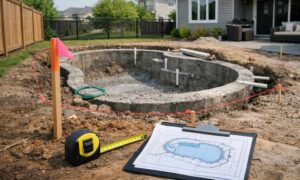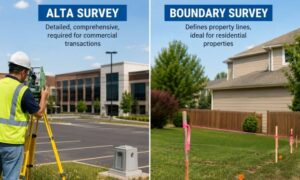
When you buy a retail pad or a small industrial site, you are not just buying land. You are buying risk. Access risk. Boundary risk. Utility risk. Zoning risk. And most of those risks show up at the worst time — right before closing. That is why working with a commercial property surveyor matters so much. An ALTA survey is not a simple map. It is a custom-built risk tool. And the scope behind it determines whether your deal moves smoothly or stalls at the finish line.
First, It Starts With the Title Commitment
Many buyers say, “I need an ALTA survey.” However, an ALTA survey only works correctly when it matches the title commitment.
A commercial property surveyor reviews the legal description first. Does it match what the seller thinks they own? Are there overlaps? Are there gaps?
Next, they study Schedule B exceptions. These include easements, access agreements, shared driveways, and utility rights. If the survey does not reflect these properly, the title company may refuse to remove the survey exception.
In other words, the survey must line up with the title. Otherwise, you will revise it later. And revisions mean delays.
Then, the Surveyor Looks at the Type of Property
Not all commercial sites carry the same risks. A retail pad faces different issues than a small industrial yard. Because of that, the ALTA scope must adjust.
Retail Pad Sites
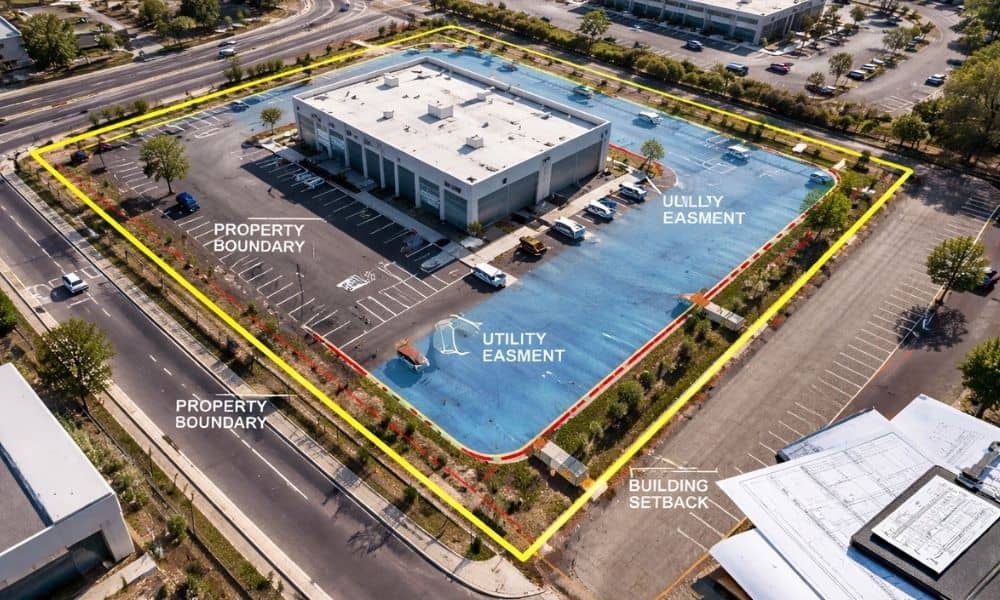
Retail pads often sit inside larger shopping centers. That means shared access, cross-parking, and drainage agreements.
A commercial property surveyor will check:
- Shared drive aisles
- Parking counts
- Building setbacks
- Signage easements
- Utility corridors
For example, if parking falls short of zoning rules, a lender may pause funding. So, confirming these details early protects the deal.
Small Industrial Sites
Industrial sites create different concerns. You might have:
- Fence lines that do not match deeds
- Loading docks near property lines
- Old utility easements
- Access over neighboring parcels
Additionally, some industrial properties include older improvements that no one documented correctly. That is why field verification matters so much.
Therefore, a commercial property surveyor builds the scope around how the property functions — not just its size.
Next Comes Table A — The Real Scope Builder
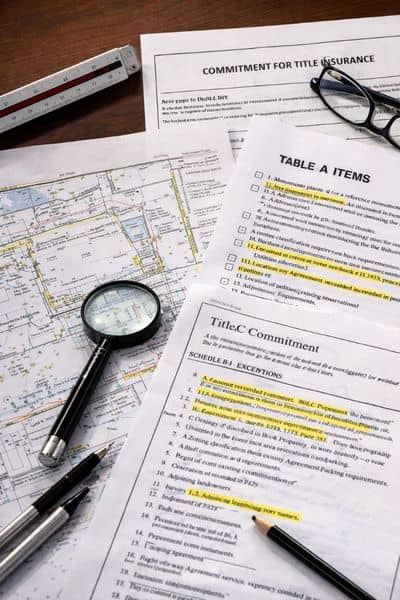
Many buyers do not understand Table A. However, this section shapes the ALTA survey more than anything else.
Table A includes optional items that customize the survey. Lenders often require certain items. Developers may need others.
For retail and small industrial sites, common Table A items include:
- Zoning classification
- Setback lines
- Parking counts
- Building height
- Utility evidence
- Flood zone information
- Access points
- Parcel contiguity
If you skip important items at the beginning, you will likely add them later. And when you add them later, crews must revisit the site. That costs time and money.
Instead, a commercial property surveyor discusses these needs before mobilizing. As a result, the fieldwork captures everything in one visit.
Coordination With Lender and Title Happens Early
One of the biggest mistakes in commercial deals happens when survey coordination starts too late.
Most title policies include a general survey exception. To remove that exception, the survey must meet certain standards. Certification language must also match the lender’s wording exactly.
If certification language does not match, the lender may reject it. Then the surveyor must revise and re-certify the document. That alone can push closing back by one or two weeks.
A commercial property surveyor avoids that problem by confirming certification requirements early. They ask:
- Who needs certification?
- What entities must appear?
- Is survey exception removal required?
Because of this early coordination, the final survey fits lender expectations the first time.
Field Conditions Matter More Than You Think
Even the best scope fails if the site conditions create surprises.
Before sending a crew, a commercial property surveyor confirms:
- Is the property occupied?
- Are gates locked?
- Is there active construction?
- Are there safety hazards?
- Are tenants present?
For example, if a warehouse operates during business hours, access may require coordination. If crews show up without permission, the visit fails.
Therefore, early communication prevents wasted trips.
What Happens When Scope Is Too Small
Let’s look at a common scenario.
A buyer orders a “basic ALTA.” However, the title commitment arrives late. Then, the lender requests parking verification. Meanwhile, attorneys request updated certification language. On top of that, the zoning setback lines were not included in the original scope.
Now the survey requires updates. Crews may revisit the property. Drafting must restart. Closing moves back.
All of this could have been avoided with stronger scope planning.
In contrast, when a commercial property surveyor defines scope clearly from day one, fieldwork captures everything. Title exceptions appear correctly. Certification language matches lender needs. As a result, closing stays on track.
Why This Matters in Growing Markets
Growing areas often see faster transactions. Investors move quickly. Retail pads sell before full build-out. Small industrial sites change hands as demand rises.
However, speed increases risk. Out-of-town buyers may not understand local zoning rules. Older industrial properties may carry legacy easements. Retail centers often include layered agreements.
Because of that, working with an experienced commercial property surveyor becomes even more important. They anticipate problems before they surface.
How Buyers Can Help From the Start
You can help your surveyor build the right ALTA scope by sharing information early.
Provide:
- The full title commitment
- Purchase agreement if possible
- Lender contact details
- Intended use of the property
- Expected closing date
When you share these details upfront, your commercial property surveyor can tailor the scope precisely. That means fewer revisions and smoother coordination.
The Big Picture
An ALTA survey is not just a drawing. It protects your investment.
A commercial property surveyor does much more than measure lines. They translate legal documents into physical reality. They connect title requirements to field data. They align lender expectations with site conditions.
Most importantly, they reduce closing risk.
If you plan to buy a retail pad or small industrial property, do not treat the ALTA survey as a formality. Treat it as a strategic step. When the scope fits the deal, everything else moves easier.
And in commercial real estate, timing always matters.