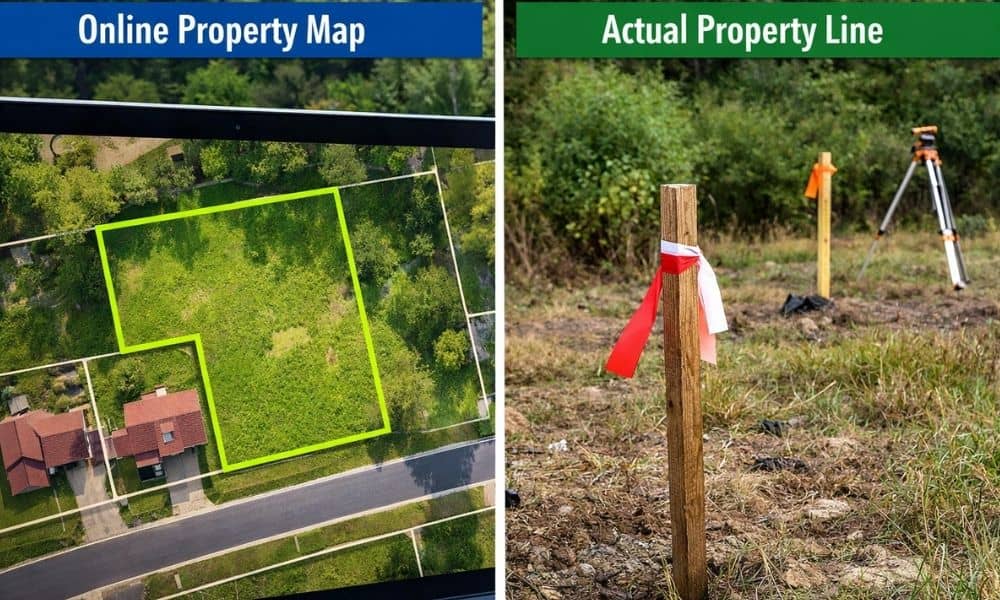
You pull up a property map online. The lines look clean. The shape looks clear. It feels like you know exactly where your land starts and ends. That’s where people slip up. In Mobile, a lot of buyers and owners rely on these maps when making decisions. It’s quick and easy, so it feels right. But those lines don’t show your true legal boundary. When you trust them, you can end up working with the wrong information. Most people don’t realize that a boundary survey of your property is what actually shows where your lines really are.
What Mobile Property Maps Really Show
Most online maps in Mobile come from county parcel data. These maps help with things like taxes and general location. They are useful for a quick look.
But they are not built to define your property lines.
The lines you see on a map are drawn from records, not from field work. They are often scaled to fit the screen. Because of that, they can shift, stretch, or miss small details.
So even if the line looks exact, it may be off by a few feet. That small gap can turn into a big problem later.
Why These Maps Can Lead You in the Wrong Direction
People trust what they can see. A clean line on a map feels real. That is where trouble starts.
You might think your yard ends at a tree line. You might believe a driveway sits fully on your lot. You might even assume your lot has more usable space than it really does.
Those ideas come from the map, not from verified data.
Over time, these small mistakes stack up. Then one day, you realize something doesn’t line up with the actual property limits. Fixing that after the fact costs time and money.
A boundary survey removes that guesswork early.
The Key Difference: Map Lines vs Measured Lines
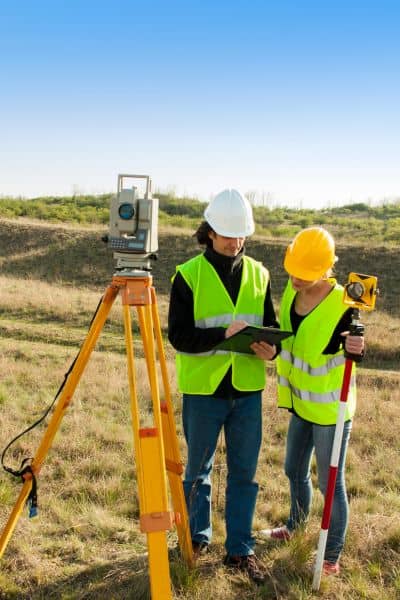
A map gives you a picture. A survey gives you proof.
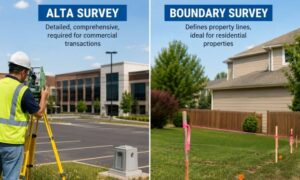
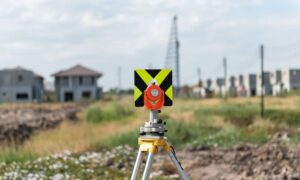
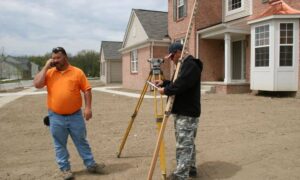
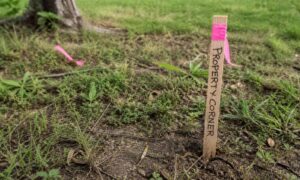
A boundary survey uses real measurements taken on the land. A licensed surveyor studies your legal description, finds or sets property corners, and marks the true boundary.
That process connects the paper record to the physical ground.
So instead of guessing where your line is, you see it marked and confirmed.
That is something a map can never do.
Why This Matters in Mobile
Why This Matters in Mobile
Mobile has a mix of older properties and newer development. Some lots were divided many years ago. Others changed shape over time due to use or updates.
Because of that, the gap between map lines and real boundaries can be wider than expected.
Also, more people now rely on online tools before making decisions. It feels normal to check a map and move forward.
But Mobile properties do not always follow simple shapes. Some lots have curves, angles, or older descriptions that do not match what you see on screen.
That makes a boundary survey even more important here.
When a Map Is Not Enough
There are moments when a map just won’t cut it.
Buying property is one of them. You want to know exactly what you are paying for. A rough outline is not enough when money is on the line.
Planning changes to your land is another. Even small shifts in placement can affect how much space you really have.
Selling property also brings this up. Buyers want clear answers. If your boundaries are not confirmed, questions come up fast.
Even simple curiosity counts. If something feels off when you look at your lot, there is usually a reason.
In all these cases, a boundary survey gives you clarity before anything goes wrong.
The Risk of Waiting Too Long
Many people wait until a problem shows up. By then, the fix is harder.
You may need to adjust plans. You may need to move something already built. In some cases, you may need legal help to sort things out.
All of that starts with one issue: relying on the wrong source.
A map is quick, but it is not reliable for decisions that involve land boundaries.
A boundary survey takes more effort upfront, but it prevents bigger problems later.
How a Boundary Survey Gives You Control
Once you have a survey, things change.
You know where your corners are. You understand the true size and shape of your property. You can plan with confidence instead of guessing.
Also, you have something you can show others. That matters when working with buyers, builders, or even neighbors.
It puts you in control of your property instead of leaving things up to chance.
Maps Are Helpful, But They Are Not the Answer
Online maps still have value. They help you explore areas and get a rough idea of a property.
But they stop there.
They do not measure your land. They do not confirm your legal boundary. They do not protect you from mistakes.
That is why so many property issues start with a simple assumption.
The line on the screen looked right.
What to Do Next
If you are looking at property, or if you already own land and want clear answers, do not rely on a map alone.
A boundary survey gives you the real layout of your property. It replaces guesswork with facts. It helps you move forward without second-guessing your decisions.
That clarity is what most property owners wish they had sooner.
And it starts with knowing where your boundary truly is.