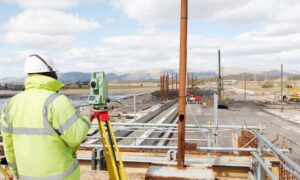
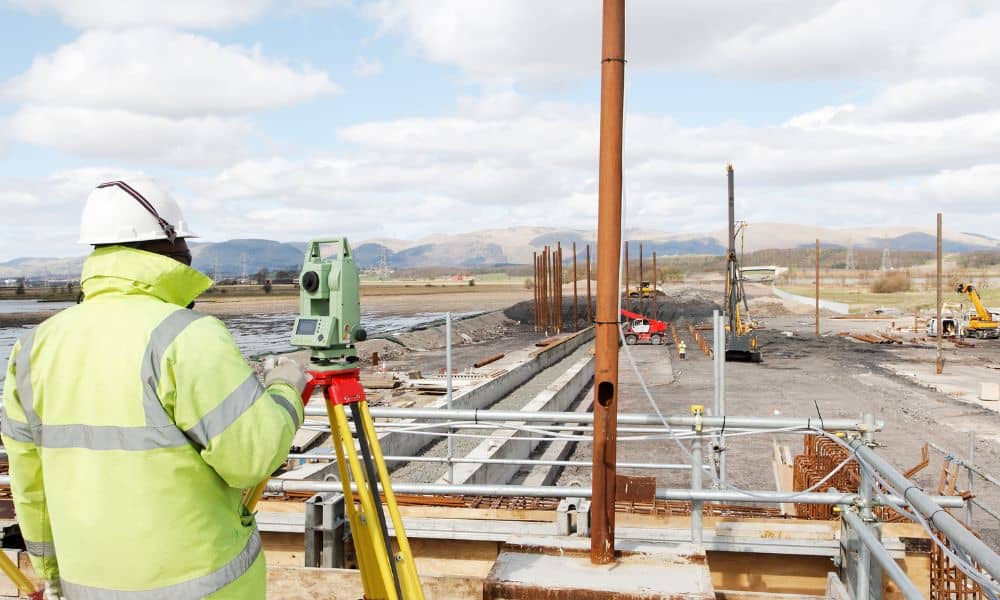
Many people assume GPS measurements always work the same way everywhere. You turn on the equipment, wait a few seconds, and get perfect coordinates. However, that’s not how high-accuracy field positioning really works. On active job sites, conditions change fast. Signals drop. Connections fail. Equipment overheats. Because of that, accuracy depends on more than just satellites. This is where a professional surveyor makes a big difference. Instead of trusting a single reading, a surveyor controls the whole process. They manage signals, corrections, checks, and backups. As a result, the final measurements stay reliable even when the job site gets messy.
RTK Corrections in Plain Language
Standard GPS gives a rough position. That works fine for maps and driving directions. However, construction layout, boundary marking, and elevation work need much tighter accuracy. That higher precision comes from RTK corrections.
RTK stands for Real-Time Kinematic positioning. In simple words, the rover unit in the field receives live correction data from a reference source through the internet or radio link. That correction tightens the position from “close enough” to survey-grade.
However, RTK only works well when the correction link stays stable. If that link drops, accuracy drops with it. Therefore, stability matters just as much as the receiver itself.
Why RTK Corrections Become Unstable on Job Sites
Active job sites rarely offer perfect conditions. Instead, they create signal and connection challenges all day long.
First, cell coverage changes across a site. One corner may show a strong signal, while another corner struggles. As machines move and crews shift, connection quality also changes.
Next, physical obstacles interfere with signals. Trees, steel buildings, cranes, and heavy equipment block or reflect satellite signals. Because of that, the receiver may lose lock even though it worked fine minutes earlier.
In addition, data links cause trouble. Many crews use phone hotspots for corrections. Unfortunately, incoming calls, battery saver settings, and overheating often interrupt those hotspots. When that happens, the correction stream stops.
So while the technology looks simple from the outside, field reality looks very different.
How a Surveyor Prepares Before Going to the Site
A good surveyor doesn’t “just show up and hope.” Instead, preparation starts before the truck leaves the office.
First, the surveyor checks coverage in the project area. They review network correction options and known weak zones. Then they load correct profiles and connection settings into the data collector. That step prevents wrong mountpoints or wrong coordinate settings in the field.
Next, they verify firmware and receiver setup. Small configuration mistakes cause big field errors. Therefore, experienced surveyors confirm settings ahead of time.
Most importantly, they plan a backup. If one correction method fails, another method stands ready. Because of that, work continues instead of stopping.
Clients may never see this prep work. However, it prevents delays later.
What a Surveyor Does On Site to Keep RTK Stable
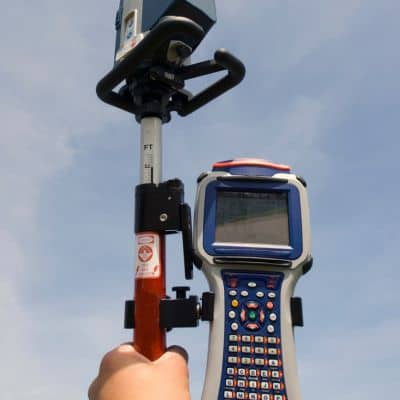
Once on site, the surveyor actively manages correction stability. They don’t just watch numbers on a screen. Instead, they watch quality indicators and behavior patterns.
First, they check the status and correction age often. A stable fix shows consistent values. If numbers jump around, they pause and investigate. That quick decision prevents bad points from entering the dataset.
Next, they choose smart receiver positions. For example, they avoid working too close to large metal surfaces or tall structures when possible. Even small moves can improve signal quality.
They also verify critical points more than once. Boundary corners, control points, and layout hubs receive repeat observations. As a result, measurements confirm themselves instead of relying on one shot.
Meanwhile, they monitor the data link device. If the hotspot overheats or weakens, they switch early instead of waiting for a full drop.
Smart Backup Moves When Corrections Get Weak
Even with planning, corrections sometimes fail. Weather shifts. Networks slow down. Interference appears. However, a skilled surveyor never forces bad data just to move faster.
Instead, they switch methods.
They may move to a better signal location and re-observe. They may switch to a different correction source. In tighter areas, they may use total station measurements tied to known control. That blended approach protects accuracy.
Because of that, the project keeps moving without sacrificing quality.
Clients benefit most from this flexibility. They get dependable results instead of rushed coordinates.
How Stability Protects Real Project Decisions
RTK stability doesn’t just matter to surveyors. It directly affects project outcomes.
For example, construction staking depends on correct point placement. If corrections drift, layout points shift. That leads to misplaced foundations or utilities. Fixing those mistakes costs real money.
Likewise, elevation shots guide grading and drainage work. Unstable corrections can skew heights. Then water flows the wrong way. Rework follows.
Boundary locations also rely on stable positioning tied to control. When corrections stay solid and checks confirm positions, confidence rises.
Therefore, correction stability protects budgets and schedules — not just numbers on a screen.
Why Technology Alone Isn’t Enough
Some people think newer equipment solves everything. Better receivers help, of course. However, equipment alone doesn’t guarantee stable corrections.
Process creates stability.
A professional surveyor follows repeatable steps: prepare, verify, observe, confirm, and adjust. They read conditions and respond early. They treat each critical point with care. Because of that, results stay dependable even under pressure.
In contrast, rushing through unstable signals creates hidden risk. Problems may not appear right away. Yet they surface later during construction or review.
Final Thoughts
RTK positioning delivers amazing accuracy when conditions support it. However, active job sites rarely stay perfect. Signals shift. Connections drop. Interference appears. That’s normal.
What makes the difference is how a surveyor manages those conditions. Through preparation, monitoring, repeat checks, and backup methods, they turn unstable signals into reliable measurements.
In the end, precision doesn’t come from satellites alone. It comes from field discipline and smart workflow. That’s what keeps project decisions built on solid ground.