Big news recently changed how land data works across the country. The U.S. Geological Survey (USGS) finished its nationwide 3D Elevation Program, called 3DEP. In simple terms, the federal government now has updated elevation data for the entire United States. That includes Alabama. At first, this sounds like great news for people in construction, development, and land planning. However, many property owners and developers are asking an important question: If public elevation data is now updated, do we still need private surveys? More specifically, how does this update affect lidar mapping Alabama projects in 2026?
What the USGS Elevation Update Really Means
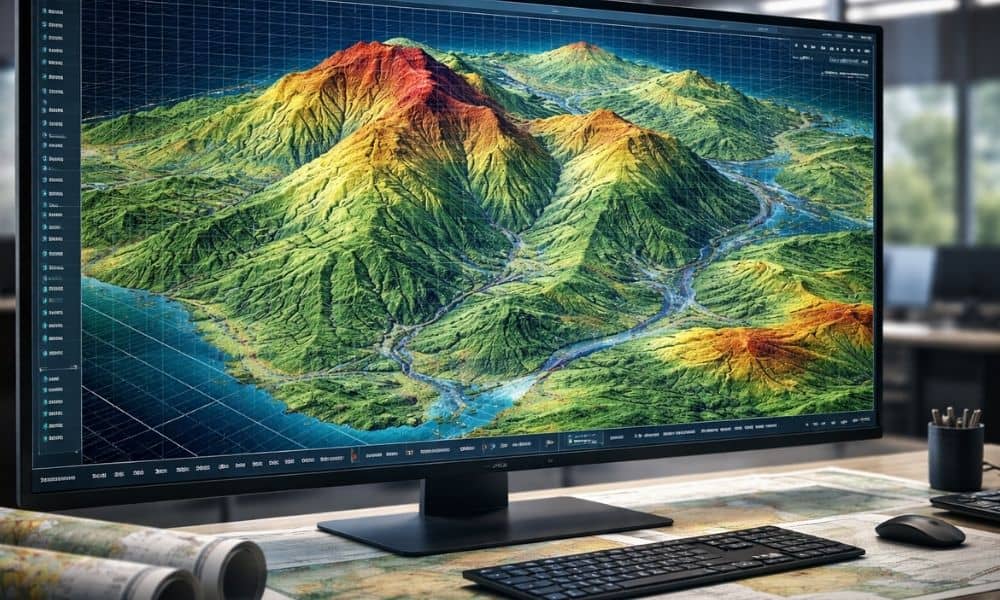
The USGS 3DEP program created a steady elevation “baseline” for the whole country. That means state agencies, counties, and planners now have better terrain data. In the past, some areas used older scans or mixed data collected at different times.
Now, the data follows one clear standard.
As a result, engineers and planners across Alabama can start early project reviews with better elevation information. This helps with large-scale planning like watershed studies, highway planning, and environmental checks.
However, this does not mean every building project now has ready-to-use construction data.
That is where confusion starts.
Public Data vs. Project-Specific Precision

Public elevation data works well at a large scale. It helps agencies understand land patterns across counties and cities. It supports transportation studies and environmental planning.
However, real development does not happen at a large scale.
It happens on one piece of land at a time.
A subdivision in Dothan. A commercial lot near Highway 84. A warehouse outside city limits.
These projects need tighter accuracy.
Public elevation data does not replace boundary checks. It does not replace construction staking. It does not give certified documents for lenders or permit offices.
That is why lidar mapping services still matter in 2026.
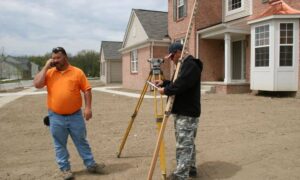
Private surveys collect detailed data for one specific site. Surveyors control flight paths and resolution. They check accuracy. They match the data with design software. Most importantly, licensed professionals stand behind the results.
Public data gives you a starting point. Private LiDAR gives you construction-level confidence.
How This Impacts Developers in 2026
Even though public data cannot replace private surveys, it still changes things in important ways.
First, developers can screen land faster. Updated elevation models help spot clear red flags early. For example, buyers can see large slope changes or drainage paths before ordering detailed surveys. This saves time during early due diligence.
However, once a property moves toward purchase or design, teams still need site-specific lidar mapping Alabama to confirm real conditions.
Second, earthwork plays a big role in construction costs. Small elevation changes can raise grading costs by thousands of dollars. With improved national baseline data, engineers can create early rough budgets with more confidence. Still, rough budgets are not final numbers. Contractors need higher-resolution scans to measure cut-and-fill volumes correctly. Without that, developers risk change orders and cost surprises.
Third, as public elevation data improves, city review offices may expect better alignment between plans and terrain. Planners now use updated elevation layers. If grading plans do not match those models, questions will follow. Because of that, accurate site scans help reduce delays during plan review.
Finally, many engineering firms use digital terrain models in design software. With updated national data, firms may start with those layers during early design. However, careful engineers always verify site conditions before final plans. Public datasets cannot show every small slope or grading break. That final check often comes from lidar mapping professionals who gather detailed site data.
Why Private LiDAR Demand Will Likely Grow
It may seem like public data would reduce the need for private surveys. In truth, the opposite may happen.
When elevation data improves, people pay more attention to it. Developers see how land shape affects cost, drainage, and layout. They understand the risks better.
Because of that, they want stronger proof.
In addition, lenders and investors rely on clear documentation. They want solid data before approving funding. If a project depends only on general elevation layers, financial partners may ask for higher-resolution confirmation.
So instead of replacing private services, the USGS update shows why site-specific mapping still matters.
What This Means for Southeast Alabama
Southeast Alabama continues to grow. Dothan expands. Commercial areas stretch outward. Farmland shifts toward housing and mixed-use projects.
Much of this land has small slopes and drainage paths that do not look serious at first. However, even small elevation changes can affect roads, stormwater systems, and building pads.
In 2026, smart developers will use two tools: updated national elevation data for early screening and detailed lidar mapping Alabama for final planning and building accuracy.
This combined approach lowers risk. It improves budgeting. It speeds up approvals. Most importantly, it builds confidence before construction begins.
The Bottom Line for 2026 Projects
The USGS national elevation update marks an important step forward. Alabama now has stronger baseline terrain data than ever before.
However, public data gives a foundation, not a final answer.
Successful projects in 2026 will not rely on one source alone. Instead, they will use national elevation data for early insight and pair it with detailed, site-specific LiDAR surveys for real-world building needs.
In the end, elevation accuracy shapes grading costs, permit approvals, and project timelines. Developers who understand that difference will plan smarter, avoid surprises, and protect their investment.
As Alabama keeps growing, the projects that succeed will stand on clear, verified ground data.