
Buying or refinancing a home should feel exciting. However, many people hit a sudden wall when their lender asks for a flood elevation certificate halfway through the loan process. The request often shows up without warning, and naturally, it creates stress.
Most borrowers assume a flood map check should be enough. Yet lenders often want more than a map. They want measured proof. They want structure-specific elevation data. That’s where this certificate comes in.
Why Lenders Care About Elevation — Not Just Flood Zones
Flood maps draw big boundary lines across neighborhoods. Still, they don’t show the exact height of your home. Two houses inside the same shaded flood zone can sit at very different elevations. One may face real risk, while the other may sit safely above flood level.
Because of that difference, lenders look beyond the map. They use a flood elevation certificate to see the true relationship between your building and the base flood level.
From a lending point of view, this makes perfect sense. The home serves as collateral for the loan. Therefore, the lender wants accurate risk data, not general estimates. In addition, insurance companies price flood coverage based on elevation numbers, not just zone color on a map.
So even if your neighbor never needed this document, your lender may still ask for it on your transaction.
Why This Request Often Appears Late in the Loan Process
Many borrowers wonder why the lender didn’t ask for this at the start. That confusion happens often. In reality, the request usually comes from underwriting review, not the loan application stage.
For example, the appraiser might flag possible flood exposure in the report. Then the underwriter takes a closer look. After that, the file gets a condition: provide a flood elevation certificate.
In other cases, the insurance quote triggers the question. If the premium looks unusually high or inconsistent, the lender may pause and request elevation verification.
As a result, the borrower feels blindsided. Still, from the lender’s side, this step acts as a safety check before final approval.
What Lenders Actually Look For Inside the Flood Elevation Certificate
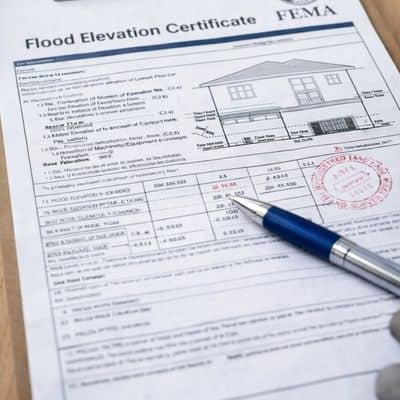
Many people assume lenders study every detail in the certificate. In practice, they focus on a few key numbers and validation points.
First, they compare the lowest finished floor elevation to the Base Flood Elevation. That comparison tells them how exposed the structure really is. A higher finished floor usually means lower risk.
Next, they review the building diagram page. This drawing shows whether the lowest area counts as living space, enclosure, or garage. That distinction matters because insurance rules treat those spaces differently.
They also check the basics that make the document official. The surveyor must sign and seal it. The address must match the loan file. The reference datum must stay consistent. If any of those items look wrong, the lender may reject the certificate and ask for correction.
So accuracy matters more than length. One missing seal can hold up an entire closing.
Why This Comes Up So Often Around Phenix City
In the Phenix City area, this request shows up frequently because flood zone boundaries run irregularly through developed neighborhoods. Some streets sit near river corridors and drainage paths. Meanwhile, updated mapping has shifted certain zone lines over time.
Therefore, one property may trigger lender concern while another nearby property does not. That difference surprises many buyers.
Also, many older homes in the area never received a flood elevation certificate when first built. Years later, when those homes sell or refinance, lenders ask for fresh documentation. Title companies and insurance carriers now cross-check flood risk more closely than they did in the past. Consequently, elevation verification requests have increased.
Before You Order One — Check If It Already Exists
Here’s something many people don’t realize: a valid flood elevation certificate may already exist for the property. Previous owners sometimes ordered one during construction, past sales, or earlier insurance reviews.
So before you schedule a new survey, look through prior closing documents. Then check with the title company, insurance agent, or even the seller. Sometimes the certificate sits in a file no one has opened yet.
If the structure hasn’t changed, lenders often accept an existing certificate. That shortcut can save days of waiting. However, if the home had major additions or grading changes, the lender may still require a new one.
How to Get a Flood Elevation Certificate Without Delaying Your Closing
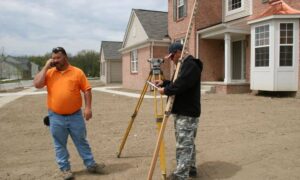
If no certificate exists, a licensed land surveyor must create one. No other professional can produce a lender-accepted flood elevation certificate. The surveyor visits the site, measures elevation points, and completes the official FEMA form.
You can help speed the process. Make sure the surveyor can access the structure easily. Unlock gates if needed. Provide any prior surveys you have. Confirm the legal address and parcel details upfront. Small preparation steps often shave days off turnaround time.
Many borrowers ask for same-day delivery. However, certified elevation work requires careful measurement and verification. So realistic scheduling works better than rushed expectations. Ordering early in the loan timeline always helps.
How This Document Can Change Your Insurance Numbers
Interestingly, a flood elevation certificate doesn’t only satisfy the lender. It can also affect your insurance cost. When measured elevation shows lower risk than expected, insurance premiums sometimes drop. On the other hand, if elevation sits lower than assumed, premiums may rise.
Either way, the numbers become accurate. That accuracy protects both you and the lender. It also prevents surprise insurance changes after closing.
The Smart Move for Borrowers and Property Owners
A lender request for a flood elevation certificate feels stressful at first. Still, it serves a clear purpose. It replaces guesswork with measured data. It supports better insurance pricing. It protects loan decisions.
Most importantly, it doesn’t have to derail your timeline. When you understand why lenders require it and where to get it, you stay in control of the process.
Plan early, check existing records, and contact a licensed surveyor quickly if needed. With that approach, your closing can move forward smoothly instead of stalling at the finish line.