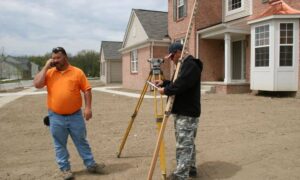
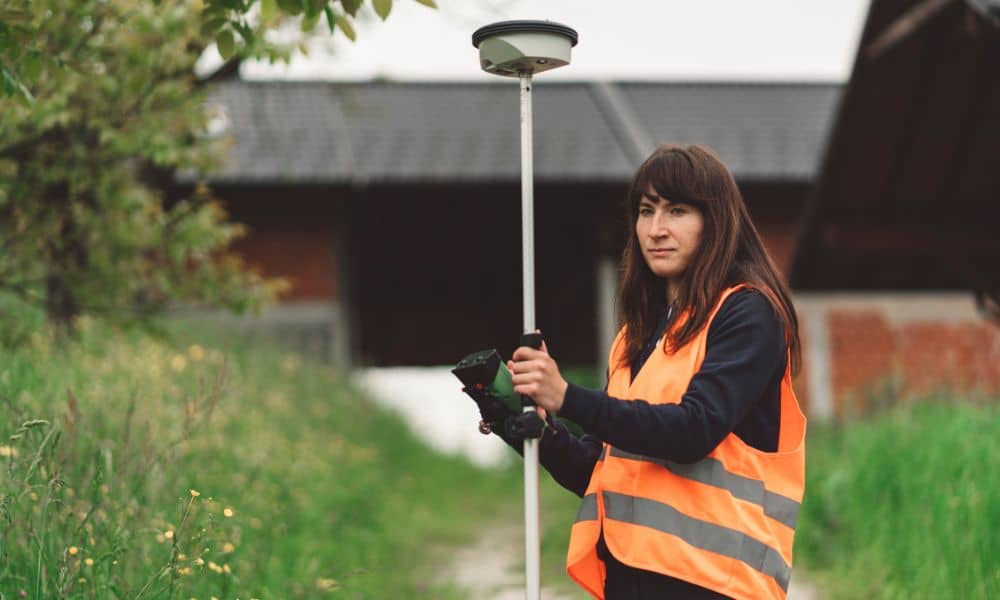
Buying land or owning property feels simple at first. You look at your yard, see the fence, and assume that’s the line. Maybe the neighbor points to a tree and says, “That’s the corner.” It sounds clear enough. However, property lines don’t begin with fences, trees, or guesses. They begin with something much older and much more important — PLSS corners. That’s why a professional land survey company must reference PLSS corners before marking your property line. Without those control points, any boundary becomes a rough estimate instead of a legally supported line.
What Is the Public Land Survey System (PLSS)?
The Public Land Survey System, or PLSS, forms the foundation of most property descriptions in Alabama. Many years ago, government surveyors divided land into a grid system. They created townships, ranges, and sections. Then they placed physical markers in the ground to define key corners.
Those markers still control land boundaries today.
When your deed references a section, township, or range, it connects your property back to that original grid. In other words, your land sits inside a system that surveyors established long before Chelsea became the growing city it is now.
Because of that, every accurate boundary must trace back to those original control points.
Why PLSS Corners Still Control Your Property Line
It may seem surprising that markers placed decades — even centuries — ago still matter. Yet in land surveying, original monuments carry legal authority. Courts and property law recognize them as controlling evidence of boundary location.
So, when a land survey company evaluates your property, they cannot simply measure from one visible stake to another. Instead, they must locate or reference the nearest controlling PLSS corners. From there, they retrace the legal boundary based on record descriptions.
This step protects everyone involved.
Without it, small measurement errors can shift a boundary by several feet. Over time, those errors stack up. One misplaced marker can affect fences, driveways, sheds, and even parts of a home.
Therefore, tying a survey back to PLSS control ensures the line reflects the true legal boundary — not just a convenient guess.
Chelsea’s Growth Makes Accuracy Even More Important
Chelsea continues to grow. New homes rise near Highway 280. Larger tracts divide into smaller residential lots. Rural land transforms into neighborhoods and commercial areas.
As development increases, so does the need for precise boundaries.
When land changes hands, buyers want clarity. Lenders want certainty. Title companies look for clean records. If a survey ignores PLSS control, issues often appear during closing. Suddenly, an old fence crosses the line. A structure encroaches. A neighbor disputes the boundary.
At that point, emotions run high and delays cost money.
A careful land survey company prevents those problems by starting at the correct control points instead of relying on visual clues.
Why Fences, Old Stakes, and “Common Knowledge” Don’t Count
Many property owners assume that an existing fence marks the true boundary. After all, it has been there for years. However, fences often follow convenience rather than the legal line.
Sometimes a previous owner built slightly inside the boundary to avoid conflict. Other times, they built slightly outside without realizing it. Over time, neighbors accept that fence as the dividing line.
Yet acceptance does not make it legally correct.
The same applies to old stakes. Not every marker in the ground represents a verified corner. Some come from incomplete surveys. Others may have shifted or been disturbed.
Because of that, a reliable land survey company must confirm each boundary by referencing controlling monuments tied to the PLSS system.
How a Proper Boundary Survey Works
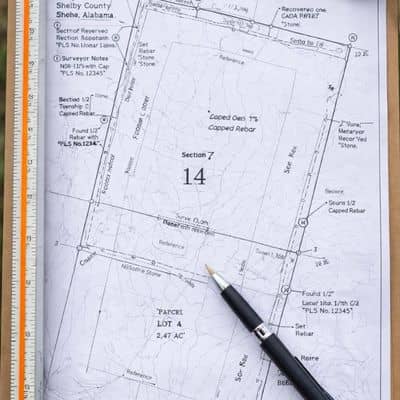
A professional survey involves more than quick measurements. First, the surveyor studies your deed and prior records. Next, they review Shelby County plats and mapping data. Then they search for nearby controlling monuments in the field.
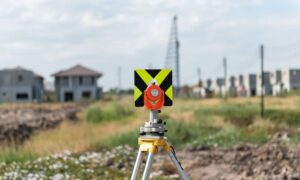
Sometimes those monuments hide underground. Surveyors use metal detectors and precision equipment to locate them. Once they confirm the control points, they retrace the boundary based on legal descriptions.
Only after that process do they set new markers or place stakes.
That extra effort may take more time. However, it protects you from future disputes and costly corrections.
What Could Go Wrong Without PLSS Control
It helps to look at real-world risks.
Imagine building a fence only to discover later that it sits on your neighbor’s land. Or installing a driveway that crosses the boundary by a few feet. Maybe you clear timber on what you believe is your property, only to face a complaint from next door.
Even small shifts can create tension and legal trouble.
Furthermore, when you decide to sell, a buyer’s survey may reveal those issues. Closing delays follow. Negotiations grow complicated. In some cases, attorneys get involved.
All of that can start with a survey that failed to tie back to PLSS corners.
Before You Build, Sell, or Improve Your Property
If you plan to build a fence, add a garage, subdivide acreage, or sell part of your land, you need certainty about your boundary. Even something as simple as clearing trees benefits from knowing the true line.
Moreover, lenders and title companies often require dependable surveys before approving transactions. They want proof that structures sit inside legal boundaries.
Therefore, investing in a thorough survey from a trusted land survey company protects your property rights and your peace of mind.
The Invisible Backbone of Your Property
Most people never see PLSS corners. They remain hidden beneath soil and grass. Still, they quietly define land ownership across Alabama.
Every deed connects back to them. Every boundary traces to them.
So when a land survey company marks your property line, they should not begin with a fence or a guess. They should begin with the legal control points that anchor your land to the original survey grid.
In a growing community like Chelsea, precision matters more than ever. And that precision starts with referencing PLSS corners — the invisible backbone of your property.