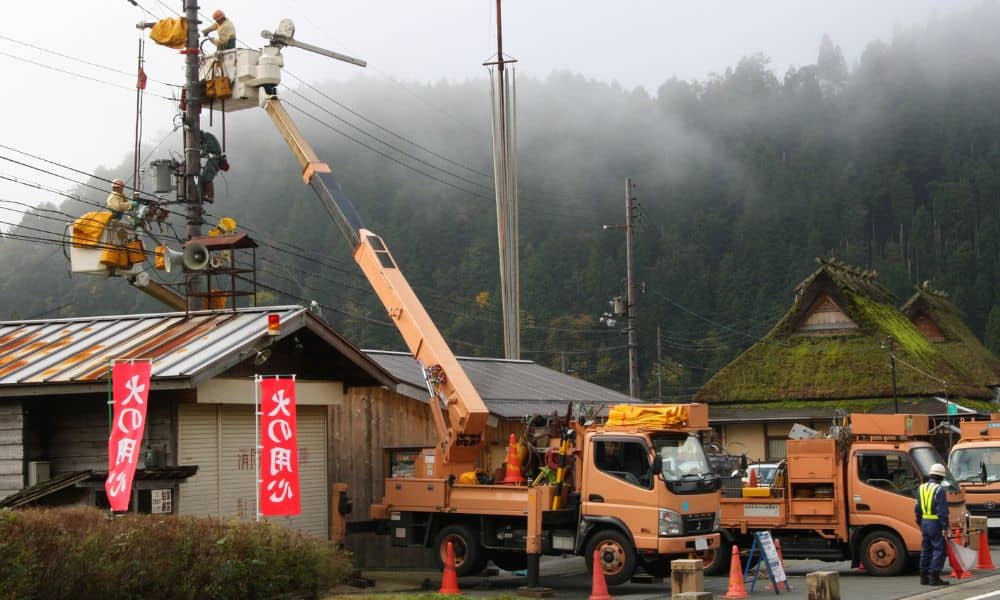
Most homeowners feel safe knowing they have a mortgage survey tucked somewhere in their closing papers. It looks official, and it usually comes with a stamp, a map, and lines that seem clear enough. Because of this, many people believe it proves exactly where their yard begins and ends. However, when a utility crew shows up and starts digging on what you think is your land, that old survey won’t protect you the way you expect. In fact, this very situation showed up in a viral video recently, and it’s the perfect reminder of how these conflicts actually play out in real life.
The video came from the UK, where neighbors confronted broadband workers who were digging up part of their garden to install fiber. People all over social media argued about who was right. Some viewers thought the workers were trespassing. Others said the homeowners didn’t understand their easements. And once again, it became the same story we see every month online: a crew digs or builds in a spot a homeowner “thought” was theirs, and suddenly the internet decides who owns what.
Yet here’s what many people don’t realize: the documents homeowners trust the most—especially the mortgage survey—rarely show the full truth about property boundaries or legal access. This is why so many fights happen in front yards, driveways, and back fences. When you only rely on old paperwork, you’re almost guaranteed to be surprised one day.
What a Mortgage Survey Really Is

A mortgage survey sounds important, but it isn’t created for you. It’s actually made for your lender. Its job is simple: show that the house sits roughly where the seller said it does. That’s it. It doesn’t dig into details. It doesn’t check your corners with precision. And it doesn’t include every easement, right-of-way, or utility corridor that runs through your yard.
Because of that, the mortgage survey often leaves out the areas where utility crews legally enter. For example, common easements run along the front of most properties so crews can work on water, power, fiber, or sewer lines. They may even cross the back of a yard, especially in older neighborhoods. But the survey you got at closing usually won’t show any of this. As a result, the first time you learn about these easements might be the moment a crew with shovels and trucks shows up.
Why Utility Workers Can Dig in Parts of Your Yard
Homeowners often panic when they see strangers digging near their shrubs or inside the edge of their lawn. Worse, some believe the workers are tearing up private property. Yet the truth is more straightforward. Utility easements give companies legal permission to access certain sections of land. These easements remain in place even when ownership changes. They also stay valid no matter what type of survey you received when you bought the home.
Even though you mow the grass, trim the hedges, and pay the taxes, certain strips of land are shared spaces meant for public service work. So, when you tell a crew member, “I have a mortgage survey and it says that’s my yard,” the crew knows that survey isn’t the document that matters. They rely on recorded plats, utility records, and engineering maps—paperwork that has nothing to do with your loan closing.
This is why the homeowners in the viral video felt confused and frustrated. From their view, strangers were tearing up their garden. From the workers’ view, they were operating inside a legal easement they use every day. The missing link was the right type of survey.
What You Should Look At Instead
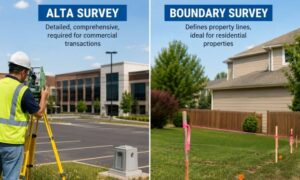
If you want clarity, you need more than the simple sketch you received at closing. You need updated mapping of your property that reflects what’s actually on the ground today. A full survey gives you that level of detail. It shows real corners, angles, rights-of-way, and even old metal pins hidden under the soil. It also marks utility and drainage easements so you know exactly where work may happen.
Although this type of survey costs more than the basic mortgage version, it gives you real protection. You see where your land ends, where shared access begins, and which parts of your yard may be used during repairs or upgrades. Because of that, you avoid confusion, arguments, and the embarrassment of confronting crews who are, in fact, allowed to be there.
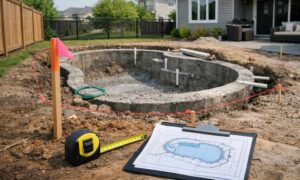
County records and online maps can help you understand the bigger picture too. They show plats and easements, which is useful when planning a fence, driveway, shed, or pool. Still, those tools only provide a general overview. A surveyor connects all the pieces on site so everything you’re looking at matches the reality of your yard.
Why Homeowners Get Caught Off Guard
People take pride in their property. So when someone steps into a yard without permission, emotions rise fast. The problem is that most homeowners never really learn where their actual corners are located, and a basic mortgage survey doesn’t help much with that. It doesn’t point out easements, it doesn’t show how far a city right-of-way reaches, and it certainly doesn’t explain that utility crews may cross part of your yard to reach a neighbor’s line. It’s easy to think everything inside your fence is yours, even when the legal records say something different.
Many homeowners only discover these details after something goes wrong. Maybe a fiber crew digs up the grass. Maybe a drainage ditch overflows. Or maybe a neighbor cuts down a tree that turns out to be sitting in the wrong spot. Without updated information, it’s easy to assume someone else made a mistake. Sometimes they did. But many times, the old survey simply didn’t show the things you needed to know in the first place.
What To Do Before a Disagreement Happens
You don’t need to wait until a crew shows up to understand your property. In fact, checking your boundaries ahead of time is the best way to avoid stress. Start by reviewing your deed and any plats recorded for your subdivision. If you don’t see easements—or if you want to be sure—hire a licensed land surveyor to create a modern boundary survey.
After that, take a walk around your yard. Look for markers, pins, or old stakes near the edges. Then compare what you see on the ground with what the surveyor provides. When you know your limits, you feel confident. You also stay calm when a crew arrives, because you understand why they’re there.
If you plan to dig, install a fence, build a patio, or put up a shed, call Alabama 811 before you start. It’s required. It also protects your family and the workers who maintain your services.
The Bottom Line
Your mortgage survey helped you buy your home. However, it won’t protect you during a property dispute or when utility workers enter a legal easement. The only way to understand your land with certainty is through updated records and a true boundary survey.
So, when you hear another story about a homeowner fighting with a crew in their yard, remember this: the argument almost always begins with someone trusting the wrong document. If you want clarity, safety, and peace of mind, invest in the right information before trouble starts.