You find a piece of land that feels perfect. It looks flat, open, and ready. So naturally, you start planning your build right away. At first, everything moves fast. You picture the house. You talk to a builder. You think about timelines. Then suddenly, everything stops. The permit does not go through. The septic system gets denied. The design no longer fits the lot. So what went wrong? In many cases, the problem comes down to details most people miss early on. A property survey is often where those details show up. That’s when you start to see what it actually uncovers about your land and why waiting too long to check can stop a project before it even begins.
Why Land That Looks Buildable Can Still Fail
It is easy to trust what you see. If the land looks clear and nearby properties have homes, it feels safe to assume your lot will work too.
However, land does not work based on appearance alone.
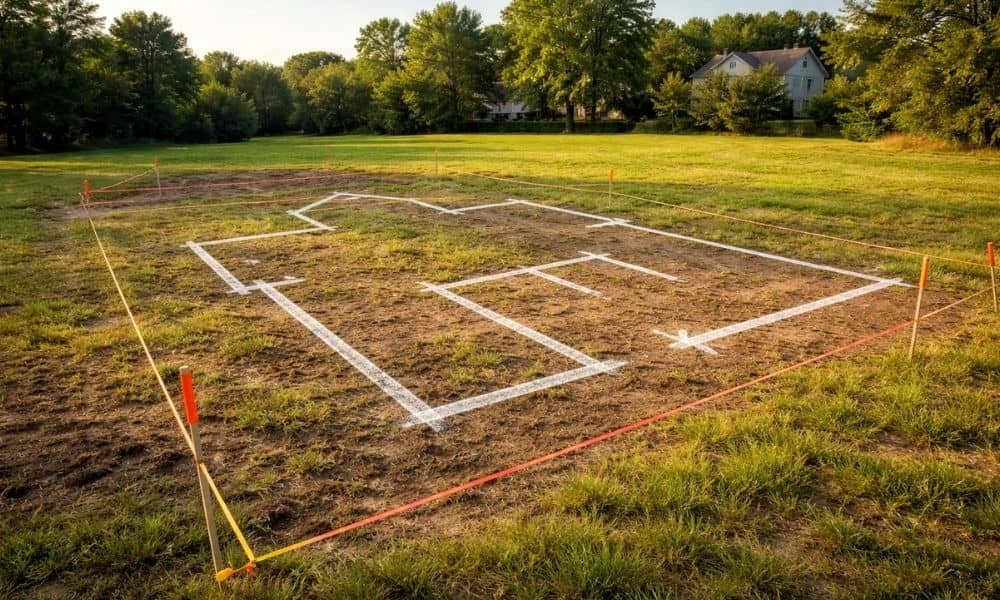
Even though a lot may seem open, the real question is whether you can actually build on it once everything is measured and reviewed. Many of these limits do not show up in listing photos or quick visits. Instead, they come down to spacing, layout, and how the land is defined on paper.
That is where a property survey becomes important. It can shape how a property survey impacts your build in ways most people do not expect until they are already deep into planning.
Because of that, many buyers only discover issues after they have already invested time and money.
When the Buildable Space Shrinks
One of the biggest surprises happens when the usable area turns out to be smaller than expected.
At first, buyers often assume they can use most of the lot. But once spacing rules come into play, the space you can build on becomes limited.
As a result, a design that looked perfect on paper may no longer fit.
This can lead to changes, delays, or even a full stop. And by that point, plans may already be in motion.
When the Shape of the Land Becomes a Problem
Even if the total size seems right, the shape of the land can cause issues.
Some lots are narrow, angled, or uneven. While that may not seem like a big deal at first, it can make placement very difficult.
For example, a narrow lot can limit how wide your home can be. An angled lot can waste space and reduce usable area. Because of that, your options become smaller than expected.
So instead of designing freely, you start working around the land.
When Easements Get in the Way
Another issue often comes from easements.
These are areas where part of your land is set aside for utilities, drainage, or access. Even though you still own the land, you cannot build on those sections.
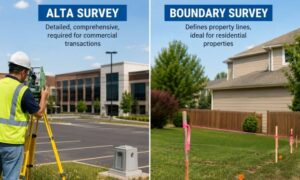
A property survey shows these areas clearly. However, many buyers do not review them early.
Because of that, they may plan a home in a space that is not allowed. Then they must shift everything, which can change the entire layout.
When Septic Systems Don’t Work
This is where many projects fail completely.
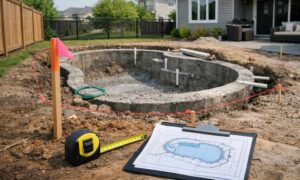
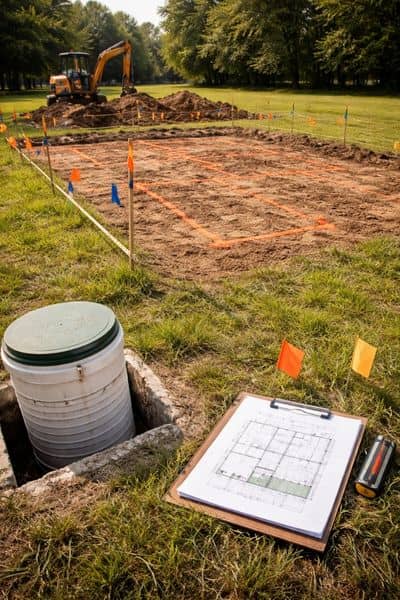
If the property depends on a septic system, placement becomes very important. The system needs enough space and must follow certain layout rules.
Here is where things connect.
The property survey defines where structures and systems can go. If the available space does not support the septic layout, approval will not happen.
As a result, the land cannot support the home.
This situation surprises many buyers. They own the land, yet they cannot build on it the way they planned.
When Access Creates a Roadblock
Some properties look accessible but have hidden issues.
For example, the lot may not have proper road access or enough frontage. Even though it feels connected, it may not meet requirements for building approval.
Because of that, permits can get delayed or denied.
This type of issue often goes unnoticed until the project reaches the approval stage, which makes it even more frustrating.
When Records and Reality Don’t Match
In some cases, the issue comes from older records.
The lot may exist on paper, but the real-world conditions do not fully match. Over time, details can change or become unclear.
A property survey checks what exists today.
If there is a mismatch, it can create problems during planning or permitting. And again, this usually happens later than expected.
Why These Problems Are Easy to Miss
Most buyers rely on simple tools when reviewing land.
They look at photos, maps, and the physical site. While those are helpful, they do not show build limits.
Because of that, it is easy to assume everything is fine.
However, what looks clear in person may not work when measured and reviewed properly. That gap is where problems begin.
Why Timing Matters More Than People Think
A property survey is often treated as a step that can wait. But waiting can create bigger problems.
If you order it after designing your home or starting permits, you may need to go back and fix things.
That leads to delays, extra costs, and frustration.
On the other hand, getting a survey early gives you clarity. You understand the land before making big decisions.
As a result, your plans move forward with fewer surprises.
Building With Confidence Instead of Guesswork
At the end of the day, most failed builds do not come from bad ideas. They come from missing details.
A piece of land may look perfect. However, hidden limits can stop everything once you try to build.
That is why a property survey plays such a key role. It does not just show lines. It shows whether your project can actually move forward.
So before you commit to building, take the time to understand the land fully.
Because building should start with confidence, not unexpected roadblocks.