
When governments admit their land records no longer reflect reality, it should make property owners everywhere pay attention. Recently, the Indian state of Goa announced a full digital re-survey of its land—its first in over 50 years. That move highlights a quiet truth: land records age, drift, and lose accuracy over time. In the U.S., buyers and lenders don’t wait for governments to fix those gaps. Instead, they rely on an ALTA land title survey to confirm what truly exists on the ground before a deal closes. That single document has become a critical safeguard at the exact moment when financial risk is highest.
When land records fall behind reality
Land doesn’t change quickly, but records do—and often in the wrong direction. Over decades, parcels get split, roads shift, utilities move, and access patterns evolve. Meanwhile, the original descriptions stay frozen in time. Even when records get digitized, the underlying data often remains flawed. Scanning old plats or overlaying maps does not correct mistakes; it simply preserves them in a new format.
That’s why Goa’s decision matters. Governments do not re-survey unless problems stack up: boundary conflicts, unclear ownership, and delays that stall development. Although the announcement came from outside the U.S., the issue feels familiar. The difference lies in how the U.S. manages the risk. Rather than re-survey entire regions, the system places responsibility at the transaction level—right before ownership and liability change hands.
Digitization helps, but it doesn’t guarantee accuracy

Digital land records create speed and access. However, they also create confidence—sometimes too much of it. A clean digital map can look precise while hiding gaps that only a field review can uncover. Old easements may not align with what exists today. Access routes might appear legal but fail practical tests. Boundaries may look clear on screen yet sit inches—or feet—off on the ground.
As a result, digital tools work best when paired with independent verification. Otherwise, errors travel faster and spread wider. That reality explains why global land reforms still require boots on the ground, even in a high-tech era.
Why the closing stage carries the most risk
Every phase of a property’s life carries some uncertainty. Yet closing stands apart. At that moment, money transfers, insurance activates, and responsibility shifts. If a record error surfaces later, the consequences grow costly. Projects delay. Coverage disputes arise. Relationships strain.
Because of that pressure, lenders and insurers look for certainty at closing—not assumptions. They want to know that what’s written on paper matches what’s actually there, on the ground, before everything becomes final. That kind of land verification before closing is where an ALTA land title survey naturally fits. It doesn’t replace public records; it simply checks them against real conditions before the risk changes hands.
The structural role of an ALTA land title survey
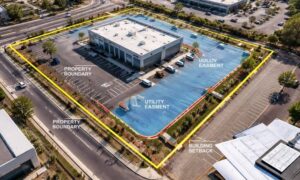
In simple terms, an ALTA land title survey functions as a parallel truth system. While public records tell a story of ownership, the survey confirms the physical facts. Surveyors examine boundaries, locate improvements, and compare what they find to recorded descriptions. If conflicts exist, they surface early—before risk transfers.
This approach allows the U.S. to avoid mass re-surveys while still protecting transactions. Rather than correcting every record everywhere, the system verifies accuracy where it matters most. That balance keeps markets moving without ignoring long-term record decay.
Common assumptions that break down
Many buyers assume that if a document appears official, it must be accurate. Others believe digital maps equal precision. Still others rely on history: “Nothing went wrong before, so nothing will now.” Unfortunately, those assumptions fail at closing.
Recorded does not always mean verified. Digital does not always mean correct. And silence in the past does not guarantee safety in the future. When development intensifies or financing enters the picture, small inconsistencies become major obstacles.
Lessons from global land reforms
Goa’s re-survey underscores a global lesson: land systems require periodic correction. Over time, small errors compound. Without intervention, they disrupt markets and erode trust. The U.S. addresses the same challenge differently, yet the goal remains identical—certainty.
Here, the ALTA land title survey delivers that certainty on demand. It steps in where public systems stop, offering a snapshot of truth at a critical moment. That role grows more important as land records age and development accelerates.
Why this matters now
Property transactions move faster today. Deals cross state lines. Financing structures grow complex. At the same time, infrastructure changes intensify record drift. Roads expand. Utilities upgrade. Parcels reconfigure. All the while, original descriptions stay the same.
Because of those forces, the margin for error shrinks. Even minor inconsistencies can delay closings or force renegotiation. Therefore, the value of independent verification rises. An ALTA land title survey does not slow progress; instead, it prevents costly reversals.
A quiet safeguard with growing relevance
The global push to modernize land records reveals an uncomfortable truth: no system stays accurate forever. Governments acknowledge it through large-scale reforms. In the U.S., the market addresses it transaction by transaction. Both paths aim for the same outcome—trust.
As land systems worldwide confront their limitations, the importance of verification becomes clear. For U.S. closings, the ALTA land title survey remains a practical answer to a universal problem. It confirms reality when assumptions fall short. It protects parties when records age. And most importantly, it delivers certainty at the moment when it matters most.